Idea
Touch the beginning.
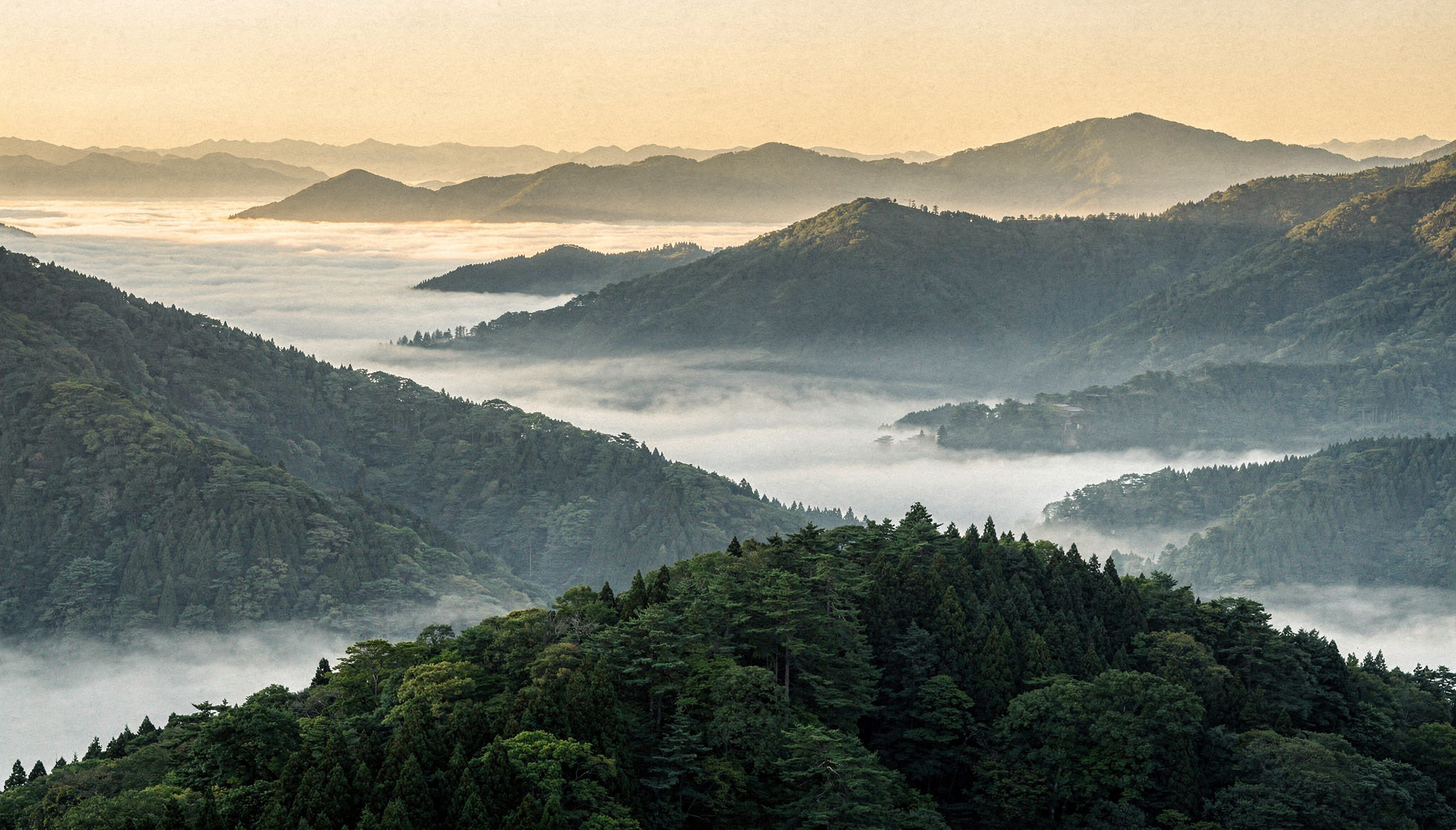
Genkyō is a project that begins from Abire — where iron was made, cattle were bred, and myth was told; where human work first met the raw beginning of nature.
The Old Border
Abire — A Place Beyond Compare
Deep in the Chūgoku mountains lies Abire — a name said to draw on the Sanskrit prefix abhi — 'surpassing, beyond', the same abhi found in Abhidharma — and to mean 'a place beyond compare.' The Izumo Fudoki, an eighth-century gazetteer, records it as a mountain in Hōki province. In the old provinces it belongs to Hōki (western Tottori) and touches Izumo (Shimane), Bingo (Hiroshima), and Bitchū (Okayama) — a hamlet in the seam of four old countries.
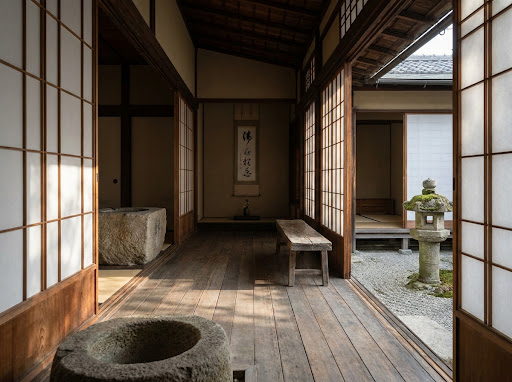
The stillness of the mountains (placeholder)
Iron & Myth
Myth — The Stage of the Kojiki
Upstream on the Hii River, at Mt. Senzū, the god Susanoo is said to have slain the eight-forked serpent Yamata-no-Orochi and drawn from its tail the sword Ame-no-Murakumo — later called Kusanagi. The Izumo Fudoki records the iron of Oku-Izumo as 'hard.'
Some read the serpent as an allegory of ironmaking: its red, festering eyes the iron-workers; its blood-soaked belly the furnace fire; the blade from its tail a sword of iron. Others read it as the flooding of the Hii River. The readings coexist; none is settled.
Another myth lies along the same ridge. The Kojiki names a Hiba-no-yama, 'at the border of Izumo and Hōki,' as a resting place of the goddess Izanami; Ohaka-yama is one of its traditional sites. Abire sits where both touch — Mt. Senzū of the sword, and Ohaka-yama of Izanami — on the ridge of the old border.
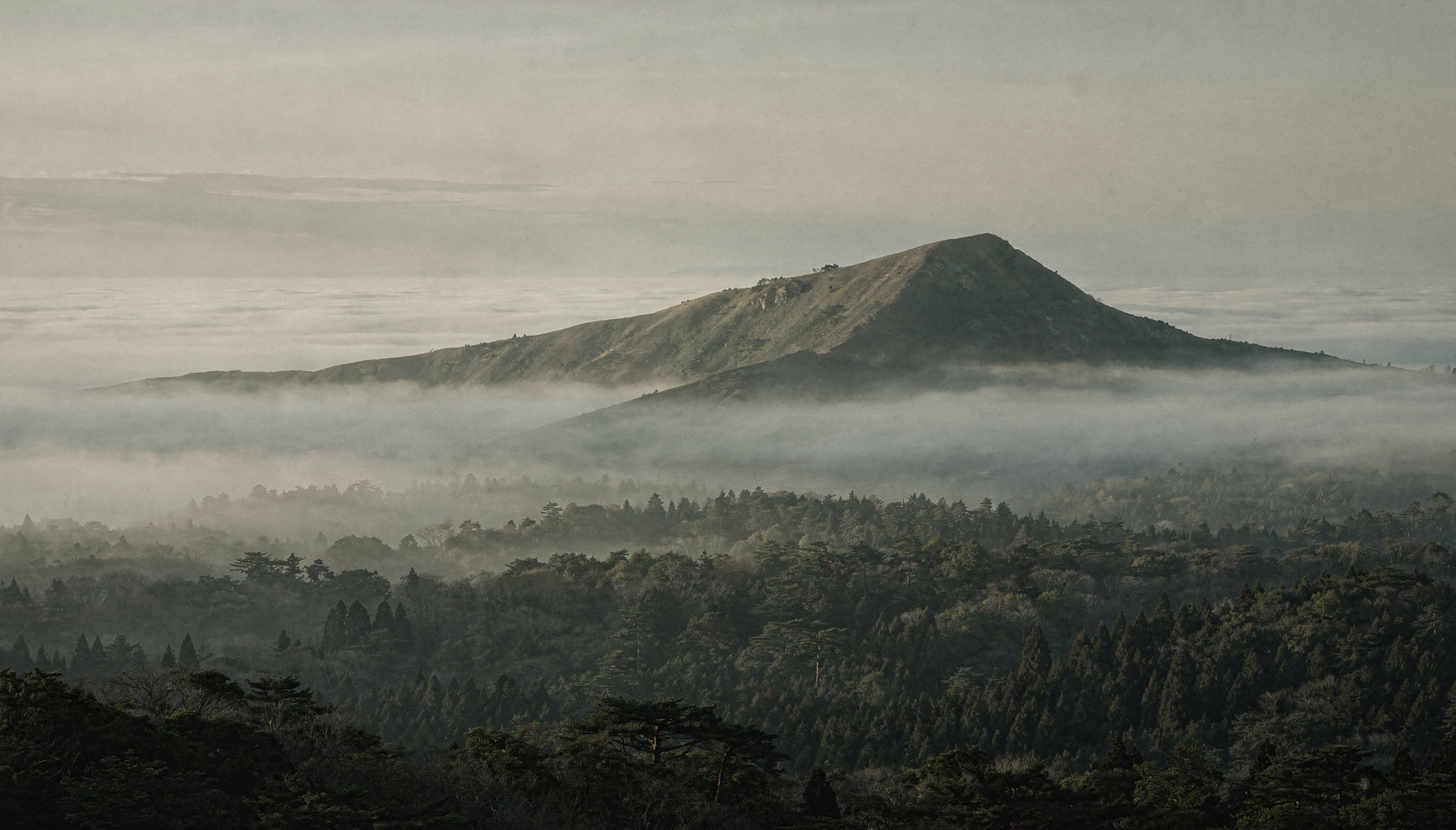
The ridge in mist — Abire mountains
Alchemy of Earth
No-tatara — The Root of Ironmaking
Before the furnace house, iron was born from a fire built in the open field. This earliest form of the tatara is called no-tatara. Blessed with fine iron sand and deep forest, Oku-Hino yielded steel suited to blades.
More than five hundred tatara sites remain in the Oku-Hino mountains. A record from the year 1600 notes ironmaking beginning at Ōtani-yama in Abire; the channels that once washed iron sand from the hillsides are now rice paddies. The district's last furnace went cold in 1921.
The god of fire and iron is Kanayago. Its head shrine sits just over Ohaka-yama, in neighbouring Nishihida (Yasugi, Shimane) — the origin of some twelve hundred Kanayago shrines across Japan. Those who make iron still keep this god.
We hold no primary source that no-tatara itself operated in Abire. We speak of it as a land that belongs to that earliest form.
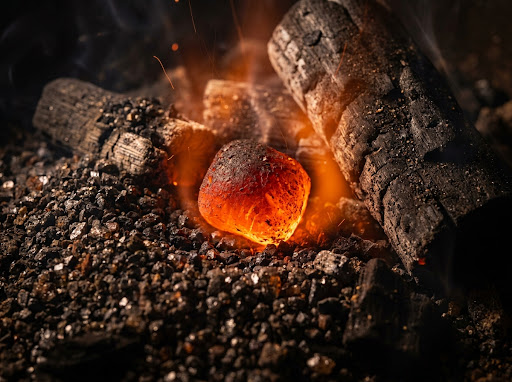
Charcoal and iron sand (placeholder)
A Living Lineage
Tsuru-ushi — The Root of Wagyū
Iron had to be carried; fields had to be tilled. In tatara country, strong cattle were prized — and that prizing led to the breeding lines called tsuru.
In neighbouring Niimi lies Take-no-tani tsuru, the oldest foundation line of Japanese Black cattle, established by Namba Chiyohei in 1830 and one of the cornerstones of today's wagyū. The source of iron and the source of cattle are bound in a single industrial history.
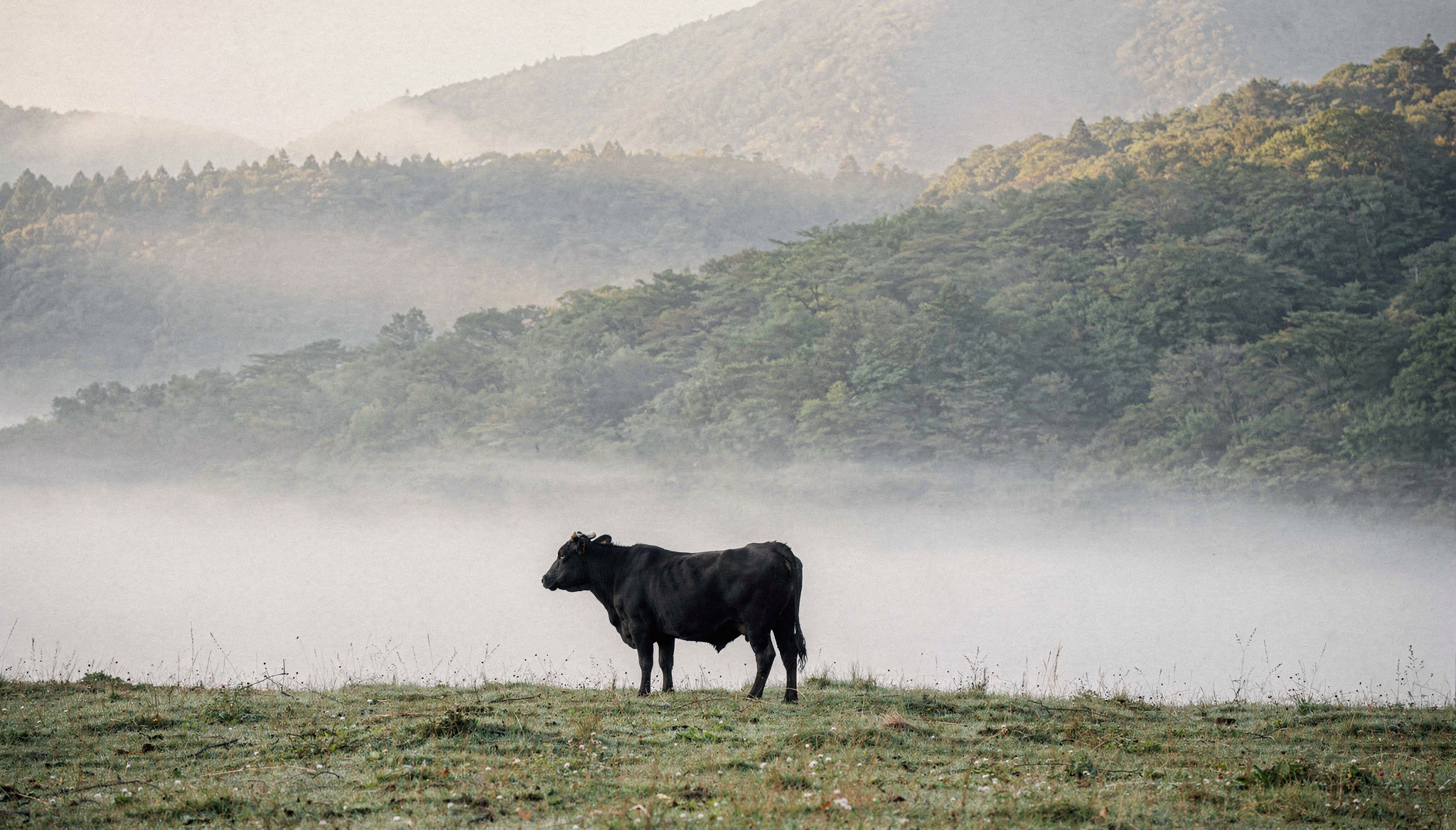
Japanese Black cattle (placeholder)
A Base in the Source-Country
Yukinko-mura — A Base in the Source-Country
Forest, stars, fireflies. At around 550 metres, in the quiet, we are building a small base for touching the origin.
The food the mountains give, served here; dogs are welcome guests. Not a contest of numbers, but a story and a stillness found only here. We will share more when we are ready.

Forest and stars
Letters from the Source-Country
Now and then, a quiet story carried down from the mountains.